Sizing information
Everything you need to know about choosing what sized bike to fit you.
Sizing information
Everything you need to know about choosing what sized bike to fit you.
Frequently asked questions
- What size MTB should I choose if I am between sizes?
How to Choose Between Two Bike Sizes
When using bike size charts or a bike size calculator, you may sometimes see two recommended frame sizes. This means that both the larger and smaller frames could fit you, and the final choice comes down to your riding style, body proportions, and personal preference.
Mountain Bikes – Opt for the Larger Frame
Most mountain bikers prefer the larger frame. A slightly bigger bike:
Reduces the feeling of being stretched out
Improves stability on technical trails
Can be fine-tuned with a shorter stem (depending on the model) without compromising handling
This ensures comfort and control, especially during longer or more aggressive rides.
Road Bikes – Adjust with a Longer Stem
For road bikes, the opposite approach usually works best. Instead of shortening the frame, it’s better to lengthen the stem to maintain proper reach, posture, and efficient pedaling. This adjustment ensures a comfortable riding position on long road rides.
Personal Fit Matters
Bike sizing is not one-size-fits-all. Factors like trunk length, arm length, and riding position all affect which frame feels best. Making small adjustments, such as stem length, can dramatically improve comfort, handling, and overall performance.
Need Expert Advice?
At The Rolling Fix Liverpool Cycles, our cycling specialists help riders of all levels choose the perfect bike frame size and make adjustments for optimal fit. Book a consultation or test ride today to find your ideal ride.
- Does wheel size make a difference?
Bike Wheel Sizes: Mountain, Road, Hybrid & Children’s Bikes
Choosing the right bike wheel size is essential for ride comfort, handling, and performance. The ideal wheel size depends on the type of bike you ride, your body size, and your riding style.
Mountain Bike Wheel Sizes
Mountain bikes typically use 26″, 27.5″, or 29″ wheels, with newer variations like 27.5+ wheels and Mullet MTBs (27.5″ rear & 29″ front).
26″ wheels – Agile and responsive, perfect for technical trails.
27.5″ wheels – Balanced stability and maneuverability.
29″ wheels – Roll over obstacles easily and offer extra stability at speed.
Road Bike Wheel Sizes
Most road bikes use 700c wheels, which provide smooth rolling, speed, and efficiency on tarmac. Tire width and wheel choice also affect aerodynamics, ride comfort, and long-distance performance.
Hybrid & Commuter Bike Wheels
Hybrid bikes usually use 700c or 26″ wheels, blending the speed of road wheels with the stability of wider tires. The right wheel size improves urban handling, comfort, and light off-road capability.
Children’s Bike Wheel Sizes
Children’s bikes range from 12″ to 24″ wheels, depending on age and height. Choosing the correct wheel size ensures safer handling, proper posture, and confidence-building for young riders.
Why Choosing the Right Wheel Size Matters
The wheel size you choose impacts:
Riding position and posture
Bike handling and stability
Terrain suitability and ride style
Selecting the correct wheel size ensures better control, comfort, and performance, whether you’re on trails, roads, city streets, or teaching a child to ride.
What Size Bike Do I Need?
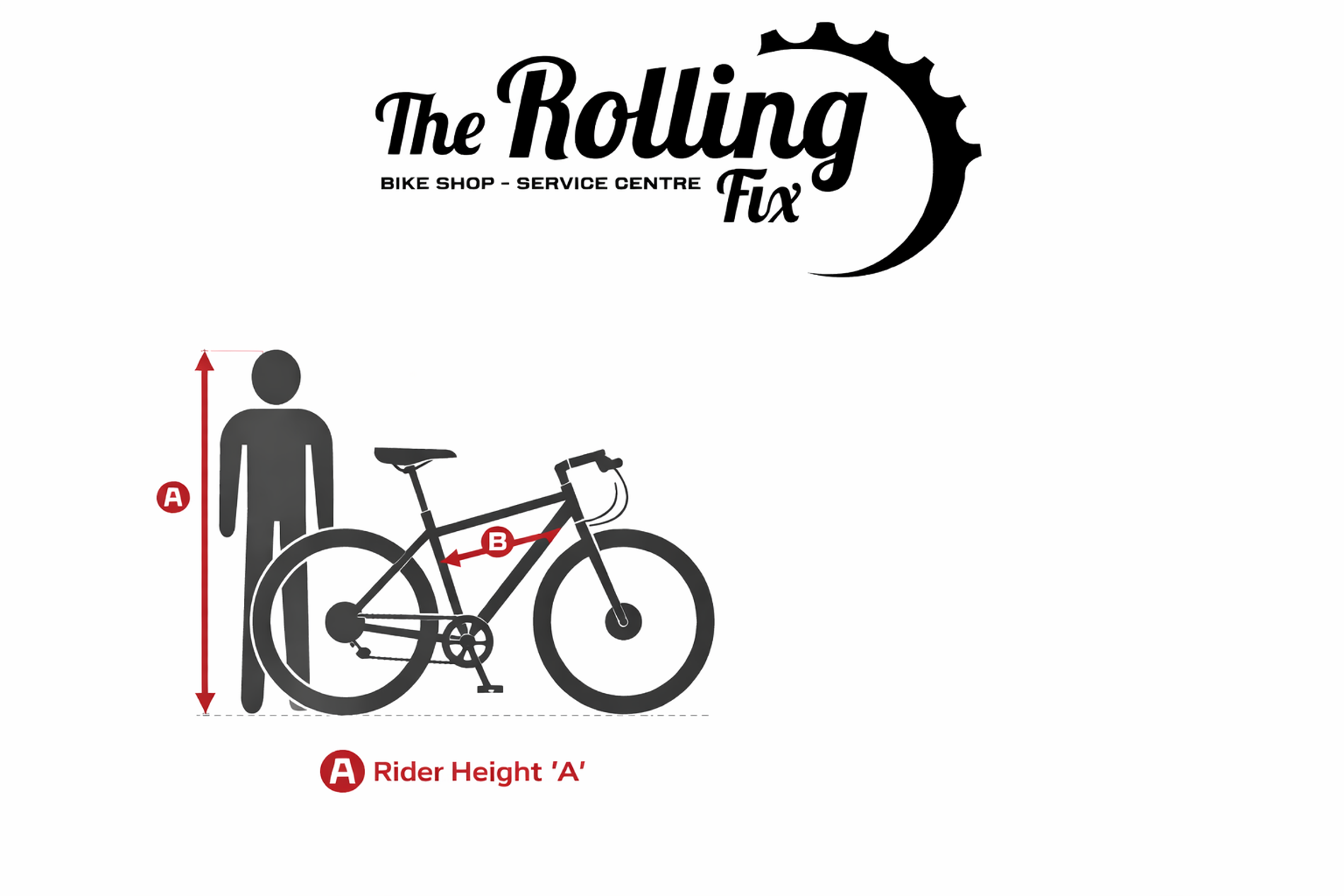
Below you'll find our general bike frame size guide, however it's always best to check the bike sizing chart on the specific model which will be more accurate once you've narrowed down your options.
| Bike Size | Road Bike Size | Mountain Bike Size | |
| Height: 4’8” – 5’1” (143 – 155 cm) | XXS | 44cm | 13” (33cm) |
| Height: 5’1” – 5’4” (155 – 163 cm) | XS | 48cm | 15” (38cm) |
| Height: 5’4” – 5’7” (163 – 170 cm) | S | 51cm | 16” (41cm) |
| Height: 5’7” – 5’10” (170 – 178 cm) | M | 54cm | 18” (46cm) |
| Height: 5’10” – 6’0” (178 – 183 cm) | L | 56cm | 19” (48cm) |
| Height: 6’0” – 6’3” (183 – 191 cm) | XL | 58cm | 20” (51cm) |
| Height: 6’3” – 6’5” (191 – 196 cm) | XXL | 60cm | 21” (53cm) |
| Height: 6’5” – 6’9” (196 – 205 cm) | XXXL | 62cm | 22” (56cm) |